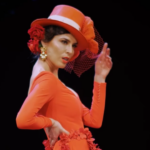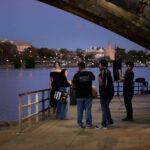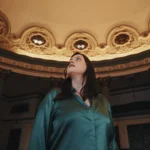
Four locations, one model, four wardrobe changes and a single day to tell the whole story. On paper, it looks like a sequence of scenes. In production, every minute spent travelling, every permit and every piece of equipment shapes the next shot.
This shoot in Seville began as an internal communications commission from dsm-firmenich. For this project, the starting point was its work in perfumery and fragrances for international brands. We translated that world into a corporate film shot in four settings across the city.
dsm-firmenich corporate film produced by La Huella Studio in Seville
Four locations and a single shooting day
The day took us through four different settings in Seville. At each stop, the light, wardrobe and intention of the scene changed. We worked with one model throughout the day and planned four changes, giving each sequence its own identity while maintaining continuity.
We chose a Sony FX6 from the Cinema Line range and a compact camera and lighting setup. We needed to move efficiently between four locations and work with the light in each scene. The small crew suited that route: equipment and staffing are scaled to the visual treatment and the needs of each shoot.
The call sheet structured the day
With four locations, a call sheet cannot simply list times. It needs to explain what happens in each sequence, how long the crew needs to get ready, what changes in art direction and wardrobe, how long each move takes and which shot must not be missed.
There also needs to be one current version. If the director is following one schedule, make-up another and production a third, problems start before the camera is switched on.

In practice, each location followed a sequence: arrival, checking the space, adjusting the lighting, make-up, wardrobe change, rehearsal, filming and departure. The schedule allowed time for travel and preparation at the next location.
The last location set the schedule
The call sheet included the weather forecast and sunrise and sunset times. We used that information to plan the route: the first scene had a little flexibility; the last depended on a very specific window of light. That final sequence was protected from the start of the day.
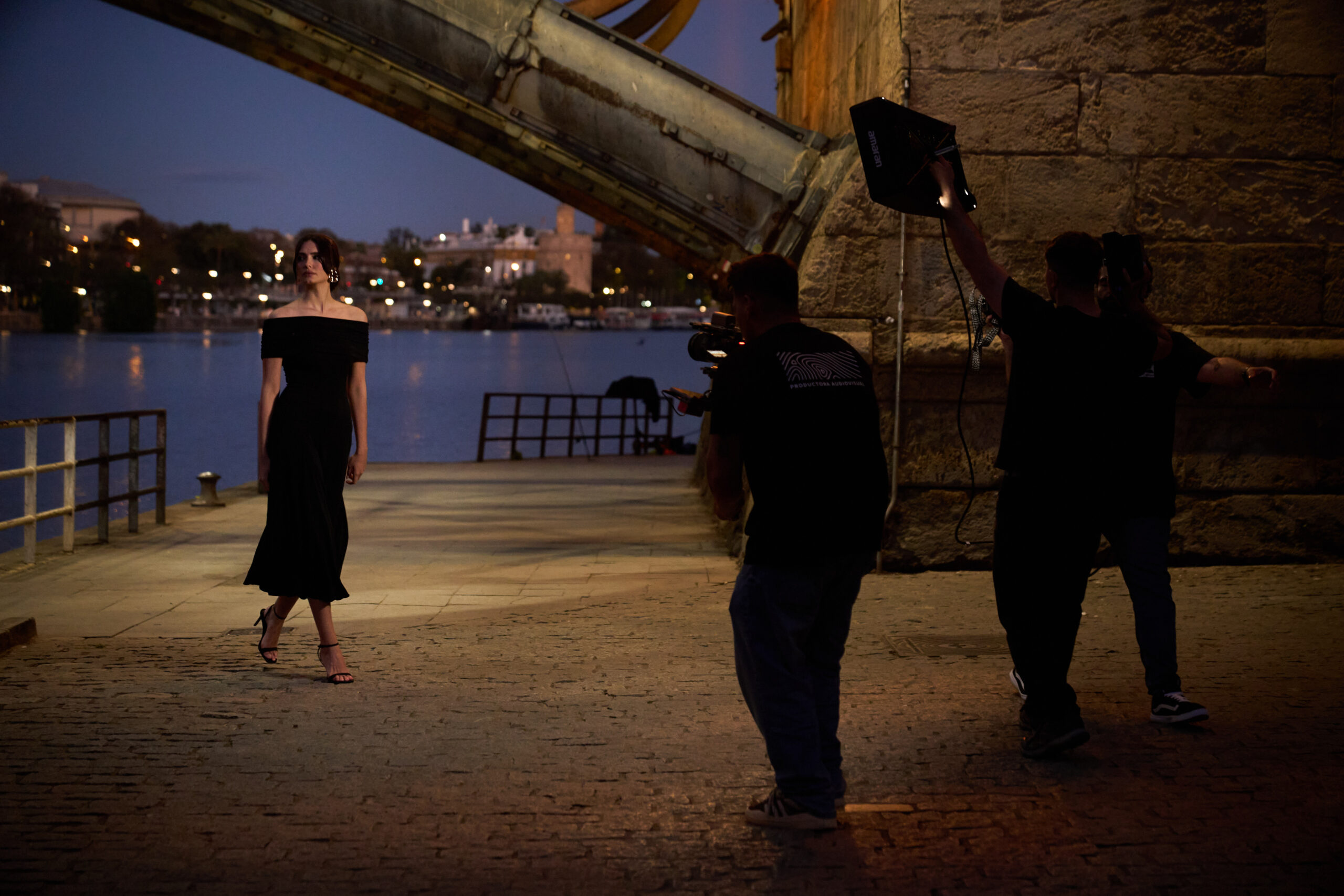
Light sets the schedule, but moving the crew and setting up also take time. Shadows, reflections, traffic and the orientation of each space can change the planned composition.
The final window of light
If the previous move takes longer than expected, you need to know which shot is essential to the story and which equipment must be ready first.
How to apply for filming permits in Seville
Procedure reviewed on 6 September 2026.
Permits depend on how you use the space, not just the size of the camera. The official point of contact is Sevilla Film and Events, the Sevilla City Office service that coordinates information and municipal applications.
Under the official procedure reviewed, a crew of up to 15 people may submit an acto comunicado (filming notification) when filming with a shoulder-mounted camera or occasional tripod use, without electrical or set equipment, special effects, equipment or props occupying public space, effects on street furniture or disruption to traffic. The form requests a public liability insurance policy.
The office publishes a processing period of 48 working hours, starting the day after submission. This does not mean automatic authorisation: feasibility and the permissions applicable to each production must be confirmed.
If the production falls outside those conditions, it requires a general filming permit application and any additional authorisations that apply.
Check the official procedure again before each shoot: requirements, documents and processing times can change. On a route with several locations, each space needs to be reviewed separately.
Four wardrobe changes on the move
Changing wardrobe between locations means planning for privacy, make-up time and continuity. Everything accompanying the model — shoes, accessories, water and backup clothing — also needs to travel in an organised way and be available before the camera arrives.
Art, make-up and production shared a plan covering the changes at every stop.
What we confirmed before setting off
- The route and order of the four locations.
- The usable window of light and the deadline for the final scene.
- Permits, notifications and conditions for each space.
- Camera and lighting equipment that could genuinely travel with the crew.
- Four looks, with continuity, backups and time to change.
- Responsibilities, contacts and one current call sheet.
- Realistic allowances for travel, meals and setup.
- A response plan for changes in weather, access or timing.
Filming in Seville while keeping the project under control
Seville offers very different locations within a few kilometres, but proximity is no substitute for production planning. The difference between ‘filming in four places’ and building a workable day lies in making the decisions before you arrive.
We coordinate locations, permits, technical crews, talent and logistics for shoots across Andalusia through our Local Service & Rental.
If you are planning a shoot, tell us your dates, proposed locations and the support you need.